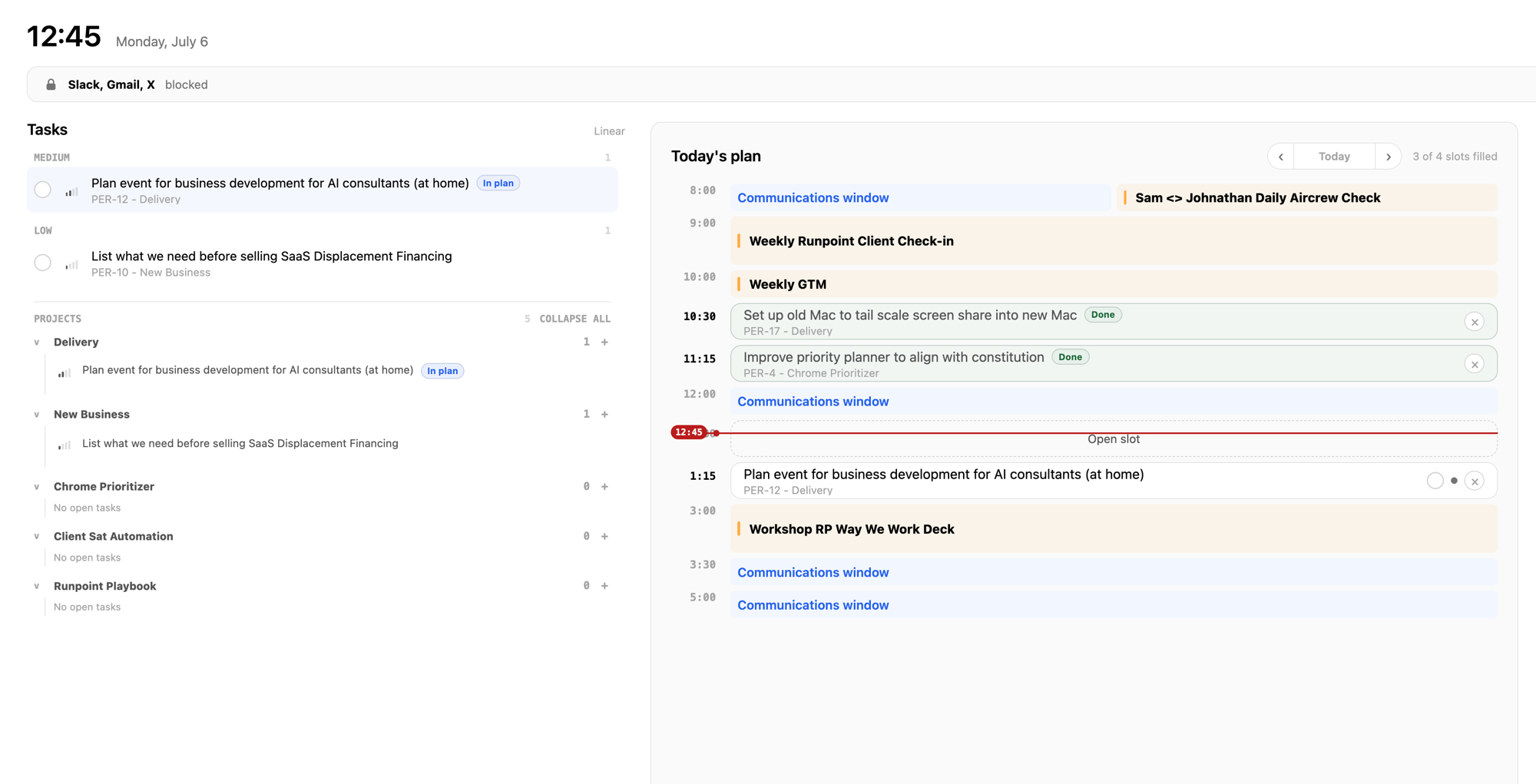
Chrome Prioritizer decides what I should do next.
Hermes keeps Linear current. This finds open calendar slots, makes me allocate time to the highest-priority work, and blocks distractions until I do.
- Input: Hermes keeps my Linear priorities current.
- Plan: Prioritizer finds open calendar slots and makes me reserve time for the highest-priority work.
- Enforcement: Twitter, email, and Slack stay blocked until the important work has time.
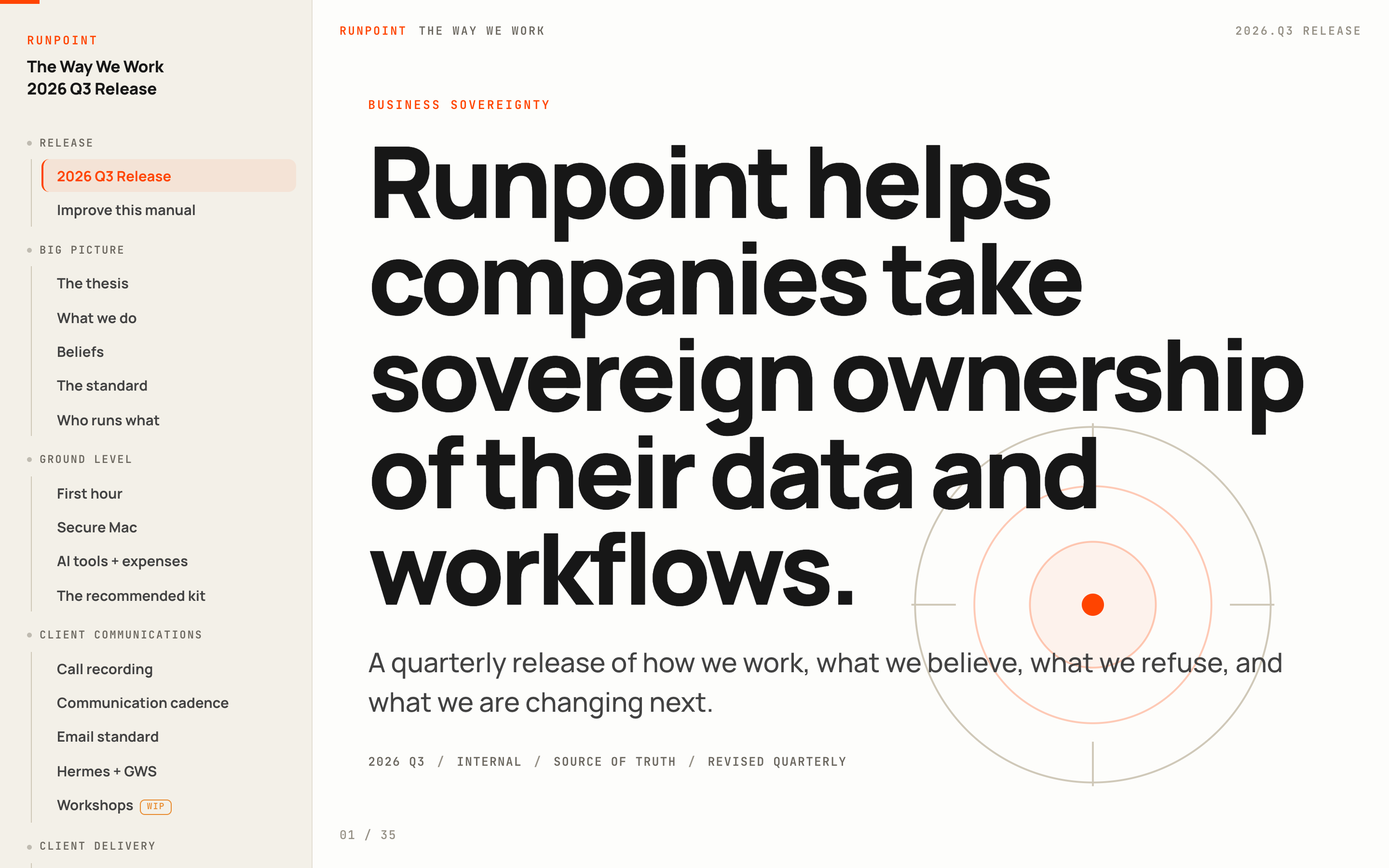
The company is a repo.
Our canonical operating manual is code. Offsite transcripts update it, teammates propose PRs, and analytics show what people actually read.
- Old version: Most companies have a canonical values and how-we-work document. I made plenty. Mine were usually bad.
- Now: The manual is code. Offsite transcripts update it. Teammates propose PRs.
- Feedback: Analytics show what people read and who is internalizing it.
- Onboarding: A couple of clicks, and people seem to like it.
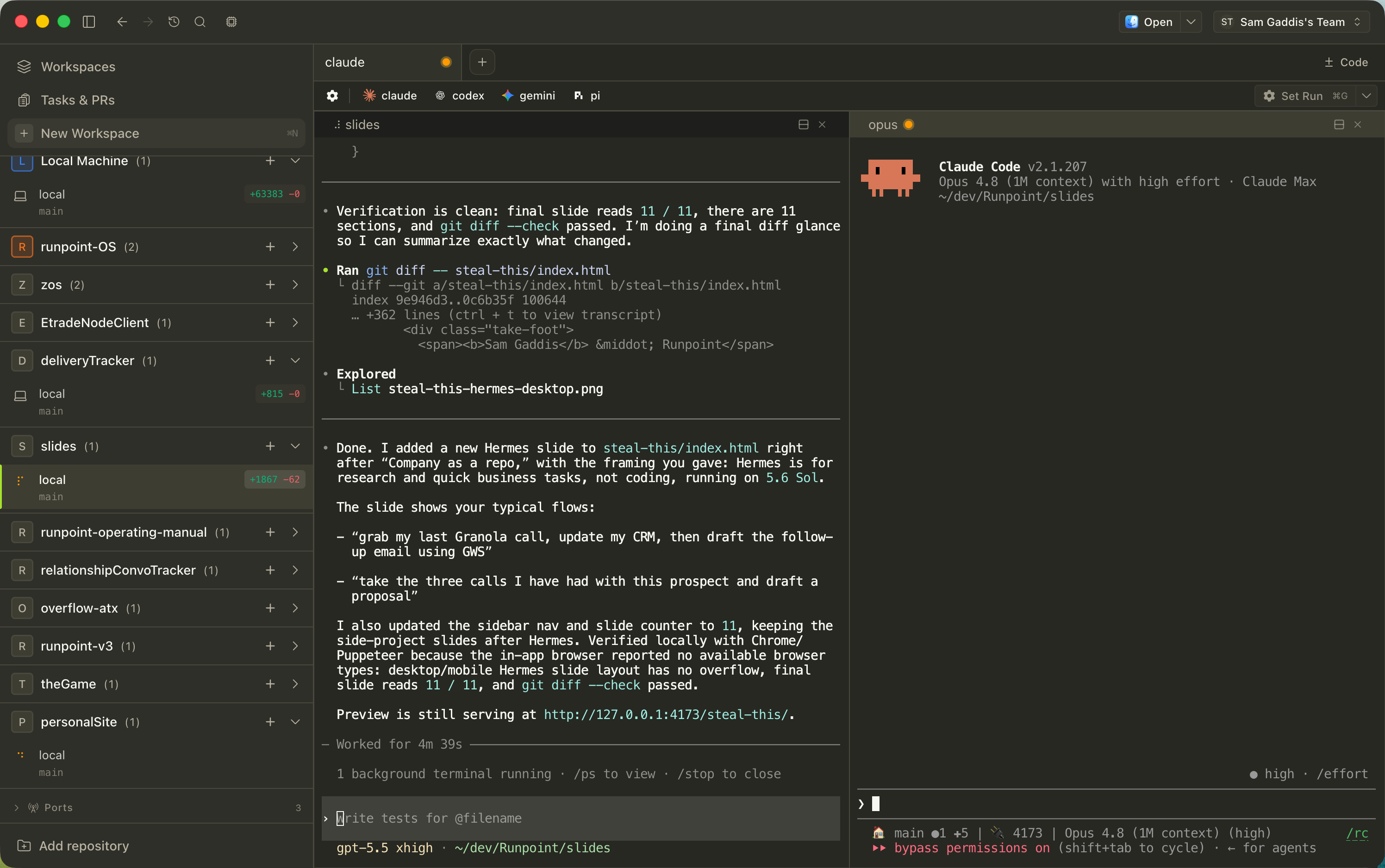
Superset is where I build.
It is similar to Warp, but it handles worktrees especially well. Each client or project stays separate, with several agents visible inside each one.
I can toggle across projects without losing track of what every agent is doing.
- Why Superset: Similar to Warp. Better for how I use worktrees.
- Structure: Each client or project gets a clean home with several agents visible.
- Benefit: I can switch projects without losing the thread.
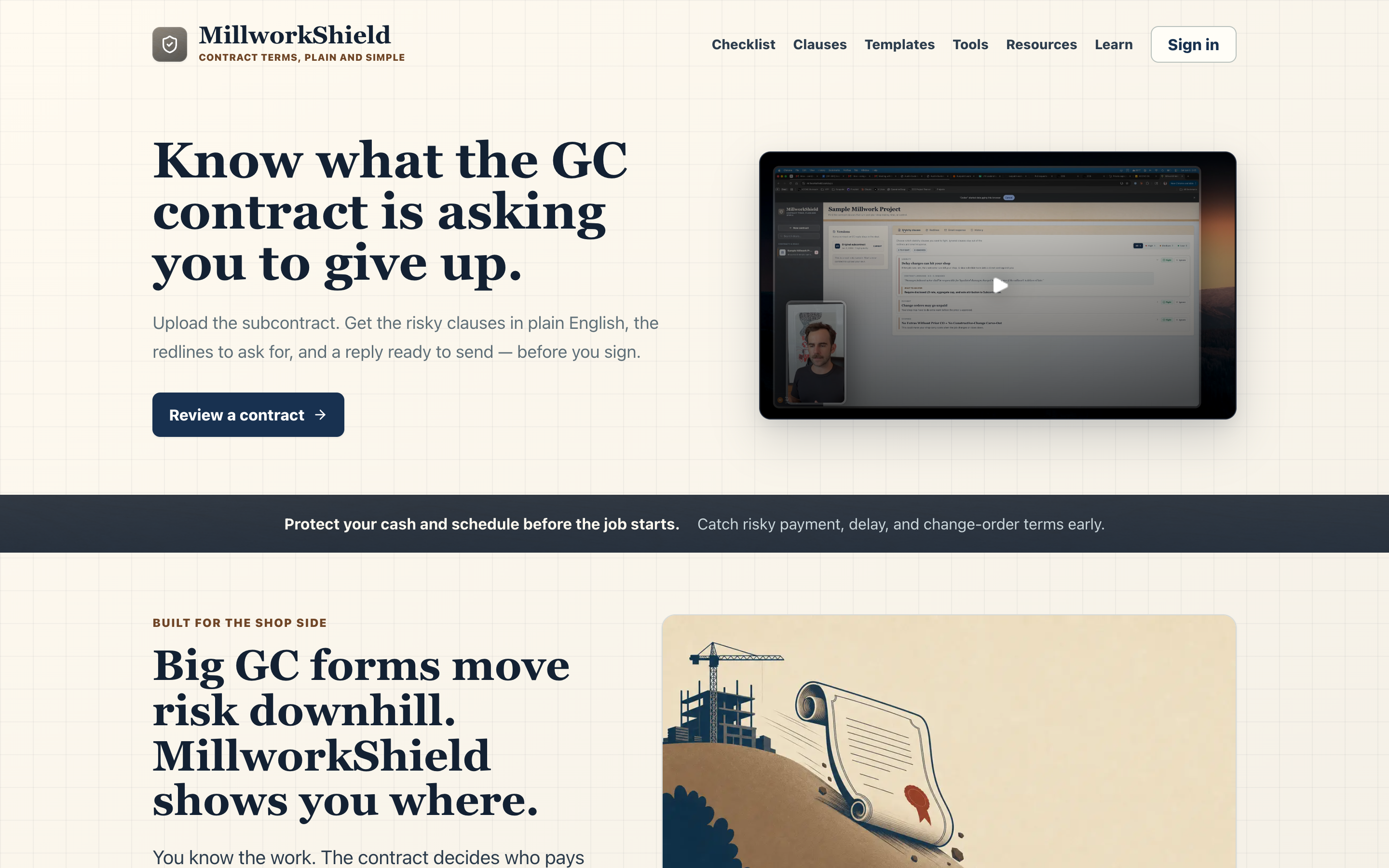
MillworkShield finds the clauses that cost subs money.
I built this free for subcontractors like my millwork shop. It reviews GC contracts, finds predatory terms, drafts redlines, and can handle the negotiation.
- Play principle: Always have side projects running for fun.
- When: I start these while an agent is doing real work.
- Why this one: I own a millwork shop. We face predatory GCs and expensive lawyers.
- What it does: Free contract review, redlines, and negotiation for subcontractors.
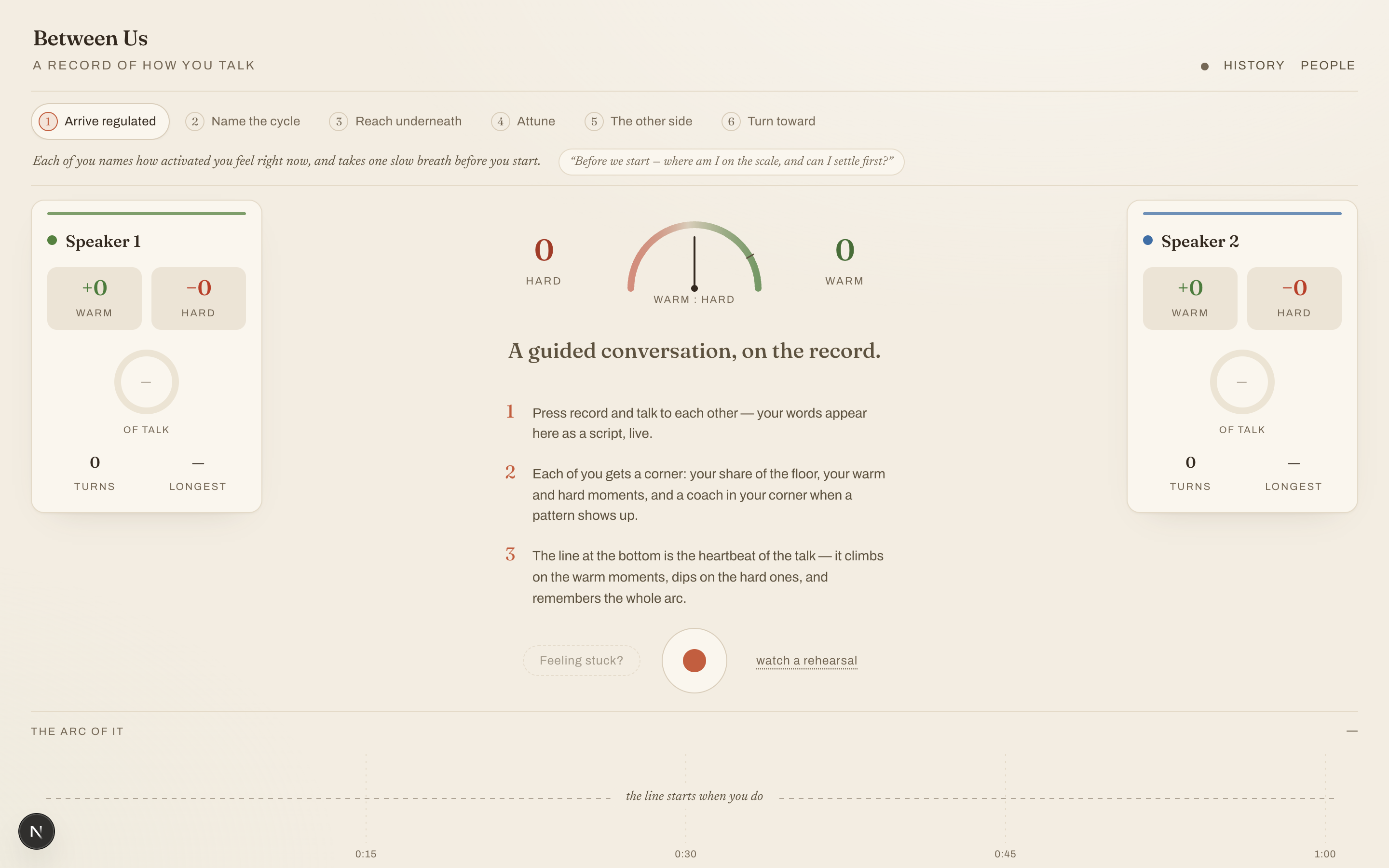
Between Us keeps score during hard conversations.
My wife and I built this experimental tool to flag defensiveness and contempt in real time, track the positive-to-negative balance, and chart the arc like a stock ticker.
- Built together: My wife and I made this experimental tool. It is separate from couples therapy.
- Live feedback: Positive moments, defensiveness, and contempt.
- Stock ticker: Shows the conversation trending up or down.
- The surprise: You try to win by being nicer. It helped us do that during conflict.
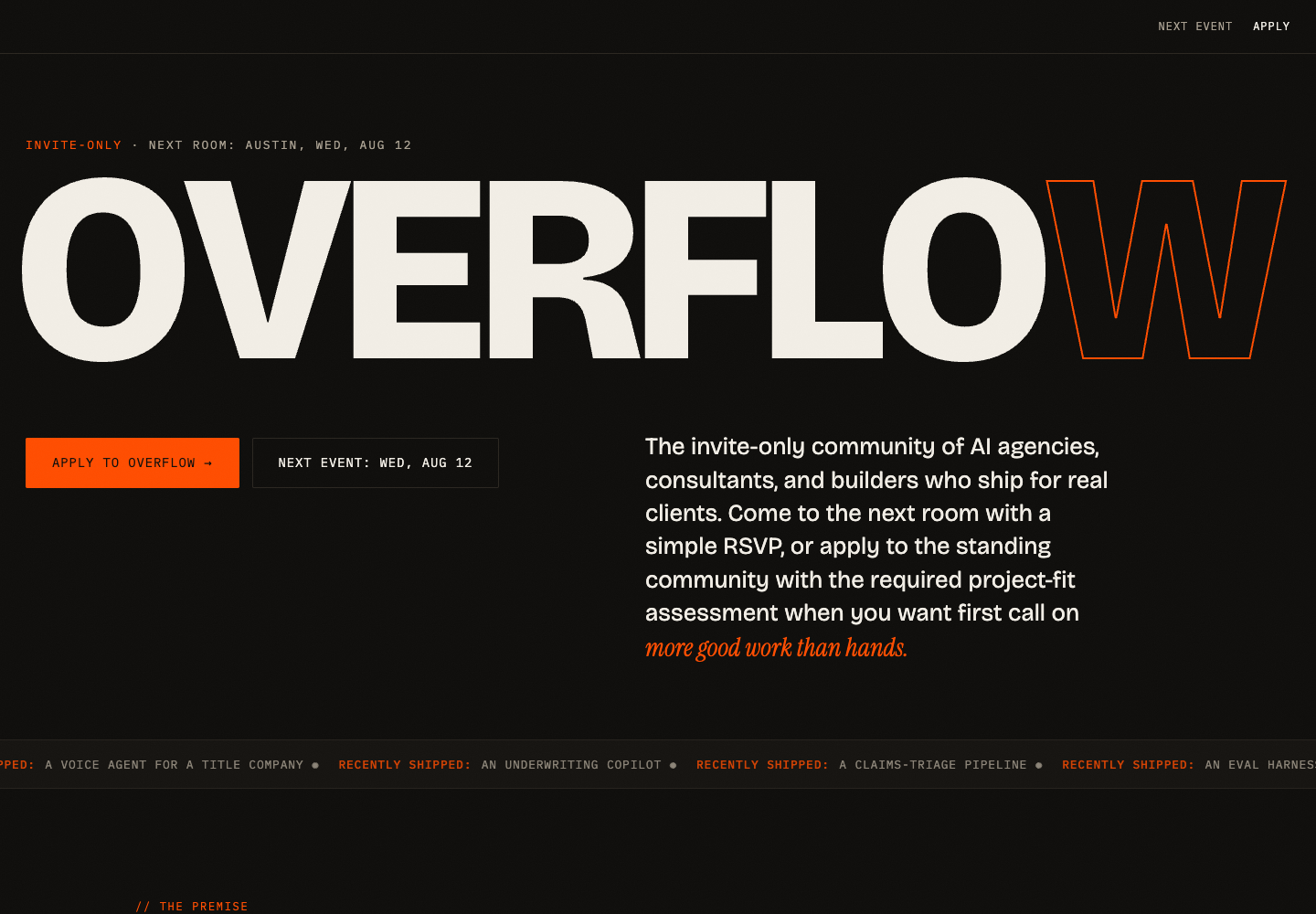
Overflow is a room for people who ship.
An invite-only community for Austin AI agencies and independent consultants doing real client work. Claude Code handles venue sourcing, invite research, and member matching.
Members can optionally create a privacy-scrubbed profile from their Codex and Claude history so we can match surplus projects to people we trust.
- Who: Austin AI agencies and independent consultants doing legitimate client work.
- Claude runs: Venue sourcing, pricing, confirmation calls, and invite research.
- Why: Route small or poor-fit projects to people we trust. Learn who we may want to hire.
- Profiles: Codex and Claude history becomes a privacy-scrubbed expertise profile. Upload is optional.
Take it all.
Everything here is stealable.
- Everything is here: The slides, every link, and the PDF.
- Take it: Copy the setup. Change it. Make it fit your work.
- Question: Which workflow would you steal first?